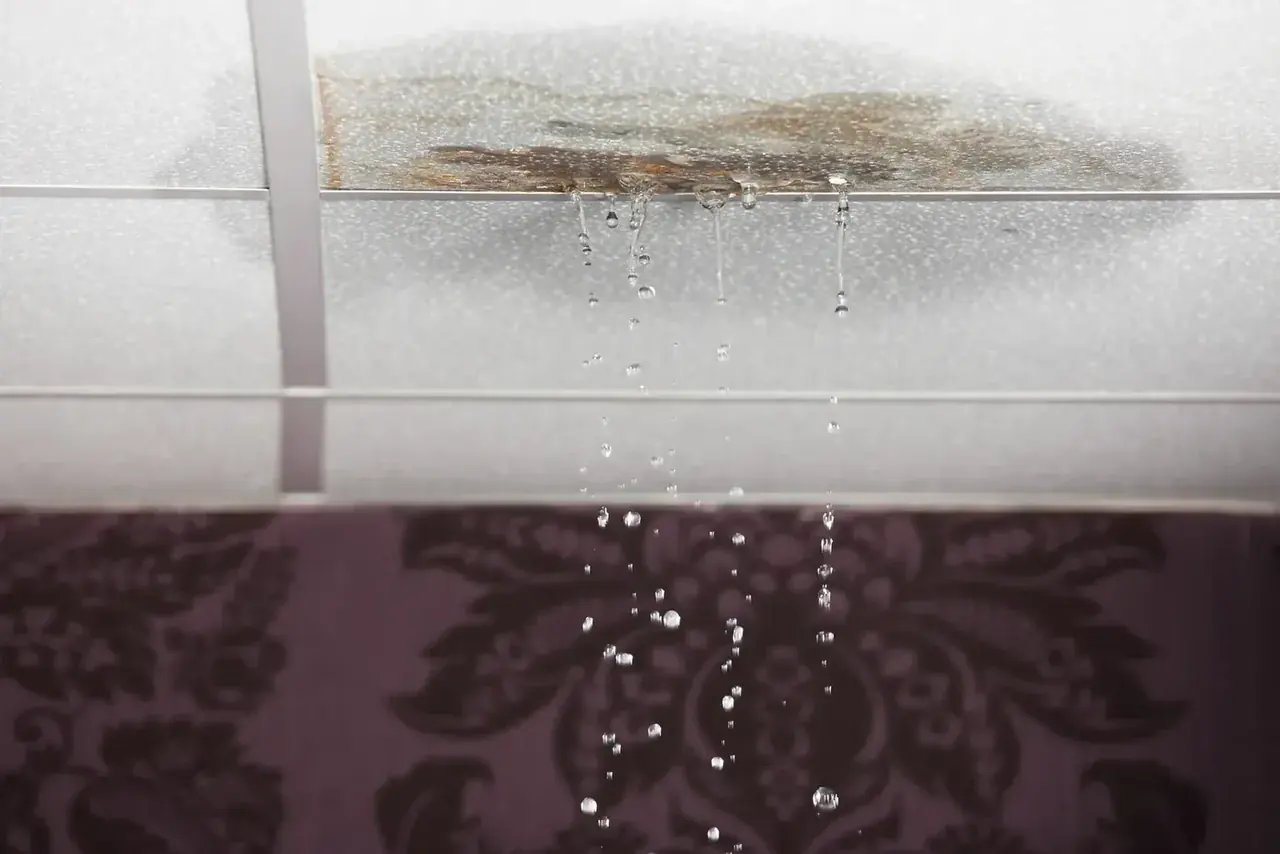
Leak or Condensation? How to Tell What's Actually Dripping From Your Ceiling
April 30, 2026
A dripping ceiling is alarming, and the first guess is often a roof leak. In many cases the cause is condensation instead. Getting the source wrong leads to unnecessary repairs, wasted money and moisture problems that keep damaging the interior over time.
Temperature swings, insulation gaps and ventilation imbalances can all produce water that looks exactly like a roof leak. You have to work out whether water is coming in from outside or moisture is building up inside. Getting that right protects the roof and also helps indoor air quality and energy efficiency. Timing, location, visual signs and a few tests at home can tell the two apart before you call for repairs or a replacement, so you can respond faster and aim the work at the actual cause.
Leak vs. Condensation: Where the Water Comes From
How Roof Leaks Form
A roof leak usually starts with damage on the outside. Rainwater gets through broken shingles, cracked flashing or failed underlayment, then follows gravity and often shows up far from where it entered. That makes the source hard for homeowners to find.
How Condensation Develops
Condensation forms when warm, moist indoor air meets a cooler surface such as attic framing or drywall and turns into droplets, with no water coming in from outside. Poor ventilation and insulation gaps are the main causes, especially in poorly sealed roof spaces.
Visual Clues That Identify the Problem
Signs of a Roof Leak
A water stain that grows after rain usually points to a leak. The stain may be yellow or brown, sometimes with a defined circular pattern. Peeling paint and sagging drywall are other common signs, and they call for an inspection right away.
Signs of Condensation
Condensation tends to show up as even dampness instead of concentrated stains. You'll often find it early in the morning, and it may dry out during the day. Metal fixtures in the attic may carry light beads of water with no visible entry point, a sign of an ongoing humidity imbalance inside the building.
Location and Timing Patterns
Rain-Linked Dripping
If the dripping gets worse during or right after rain, a leak is more likely. The entry points often line up with damaged roofing materials or clogged drainage paths, and a roofer should assess and repair them promptly.
Temperature-Linked Moisture
Condensation tends to appear during rapid temperature changes. Cold nights followed by warm mornings encourage moisture to build up inside attics and ceilings, especially in humid regions.
Structural Inspection Indicators
Roof Integrity Issues
Missing shingles, damaged flashing around chimneys or lifted roof edges often confirm a leak. Moisture trails along beams or insulation are another sign that water is getting through the roof.
Ventilation and Insulation Gaps
With condensation, the insulation may be damp but evenly so. Poor airflow in the attic traps humidity, and moisture collects on cooler surfaces with no water entering from outside. The problem tends to stay hidden and keep coming back.
Simple Tests You Can Do at Home
The Paper Towel Test
Put a dry paper towel near the affected area to track when moisture appears. If it gets wet only after rain, the water is probably coming from outside.
Attic Observation
Check the attic in different kinds of weather. Active dripping during rain confirms a leak, while moisture on dry days suggests condensation. Repeating the check through the seasons makes the diagnosis more reliable.
Temperature Comparison
Touch the surrounding surfaces to find cold spots where condensation forms. A leak area usually stays damp whatever the temperature does, so this check gives you a quick answer without any equipment.
Professional Leak Diagnosis From Apex Roofing Solutions
The right repair depends on whether the ceiling moisture comes from a leak or from condensation. Leaks come from roof failures on the outside, and condensation comes from a humidity imbalance inside. A wrong diagnosis often means repeated damage and higher repair bills. The timing, location and pattern of the moisture give you the most reliable clues.
A lasting fix goes after the cause: the damaged roofing behind a leak, or the ventilation and moisture control problem behind condensation. A structural inspection shows which one you're dealing with.
Apex Roofing Solutions brings 20 years of focused experience in diagnosing and resolving complex roofing moisture issues across Miami-Dade and Broward Counties. Our inspections are designed to separate condensation from an active roof leak, so the repair targets the real source of the moisture and the damage doesn't return.